
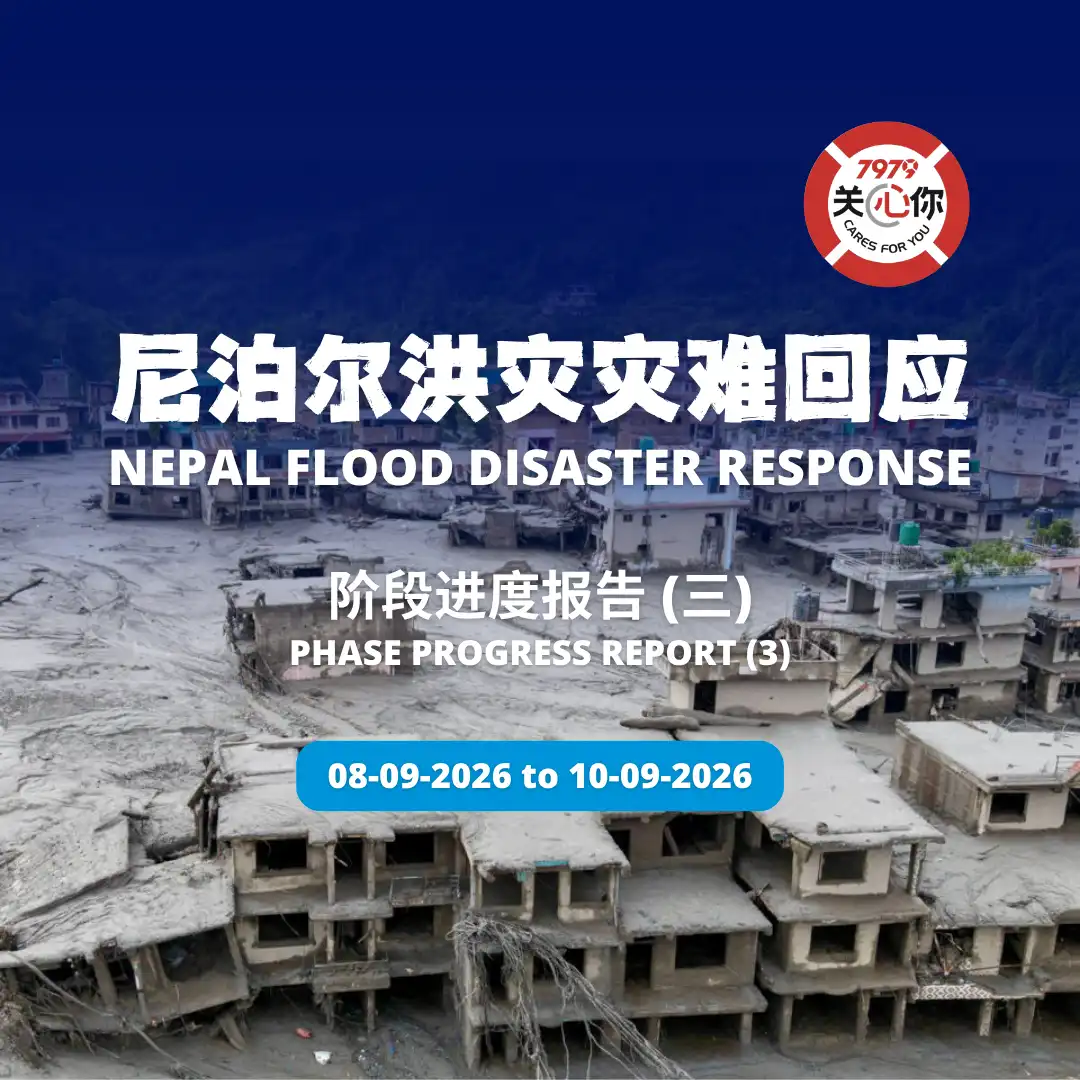
尼泊尔洪灾灾难回应 · 阶段进度报告(三)
本报告整理7979顾问Eddy Hew于9月8-10日在Bidur、Devighat的现场记录,涵盖帐篷营地进展、营地内妇女儿童服务,以及9月10日的燃气罐与民生物资发放行动。
一、帐篷营地:地方政府核准,试点推进
Devighat撤离民众原本暂住在Shree Chandrajyoti Secondary School,但该校即将复课。经Bidur市长(当天穿白色polo衫)正式核准,MCDS与合作伙伴获准在校内足球场搭建25顶帐篷,作为试点安置营地,让撤离民众有地方可以搬出校舍。
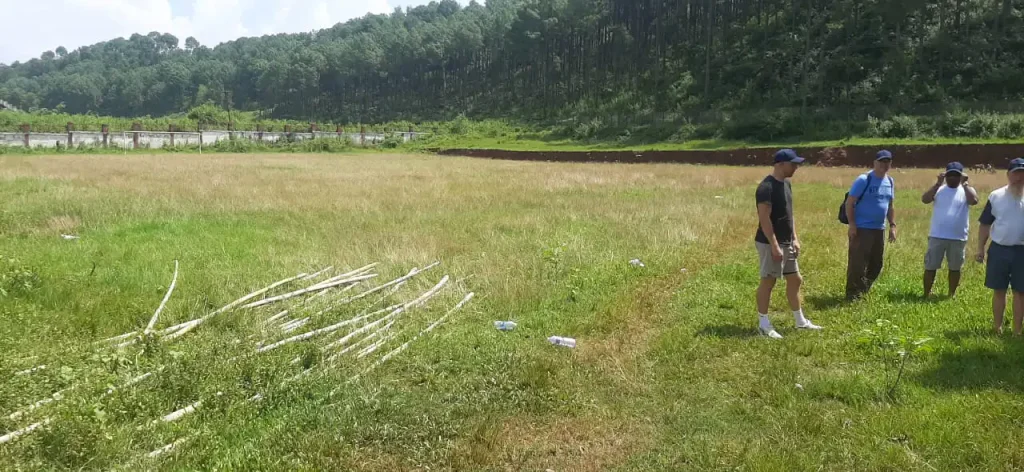

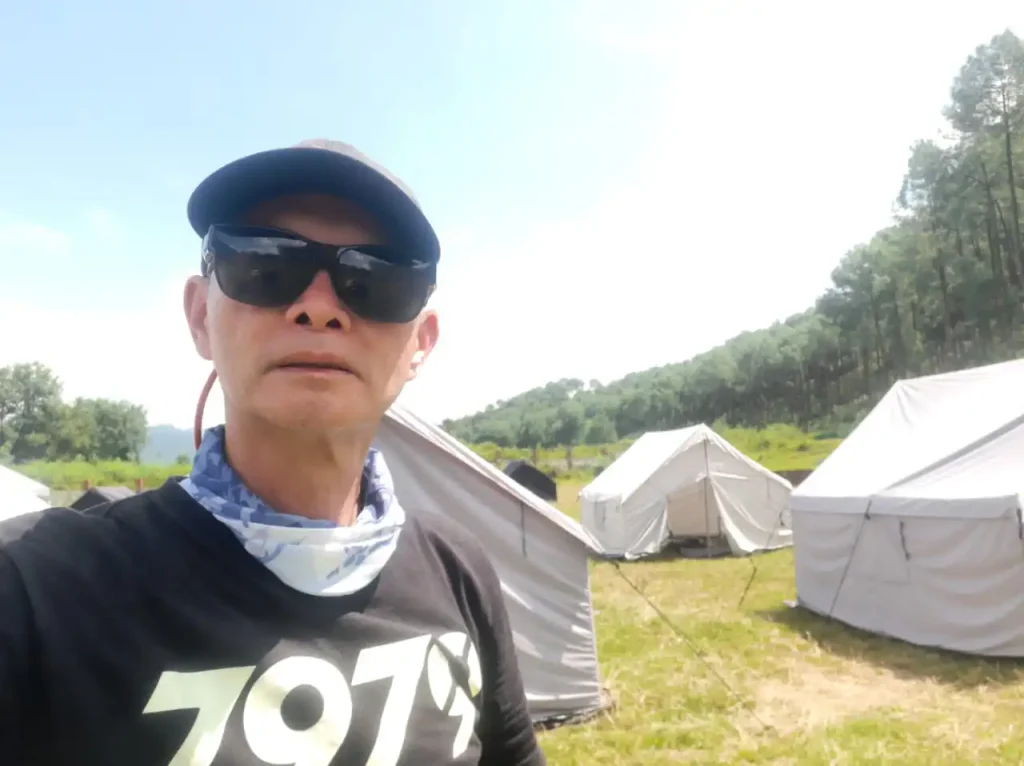
临时帐篷营地正在逐步搭建,MCDS也会根据现场实际情况继续调整营地布局。接下来,营地管理仍有不少需要面对的工作;虽然目前仍是旱季,但冬季将至,保暖用品及营地后续使用的安排,都需要提前规划。
营地筹备过程中一度因内部协调因素短暂搁置,但地方政府当晚即重新核准,帐篷营地得以继续推进;UNICEF也表达希望使用部分场地提供儿童教育服务,各单位仍在协调场地配置与分工。

二、营地内的妇女与儿童服务
除了UNICEF提供的教育空间,Eddy也在现场接触了UNFPA(联合国人口基金)及其在地执行伙伴WOREC。UNFPA将在营地设立妇女安全空间,提供心理咨询、健康检查(包括孕产妇照护),以及儿童友善空间,照顾营地内妇女与儿童的身心需要。Eddy本身也曾接受UNFPA的紧急性与生殖健康服务培训,因此能协助现场对接相关资源。
三、军方接运点:家庭协寻需求浮现
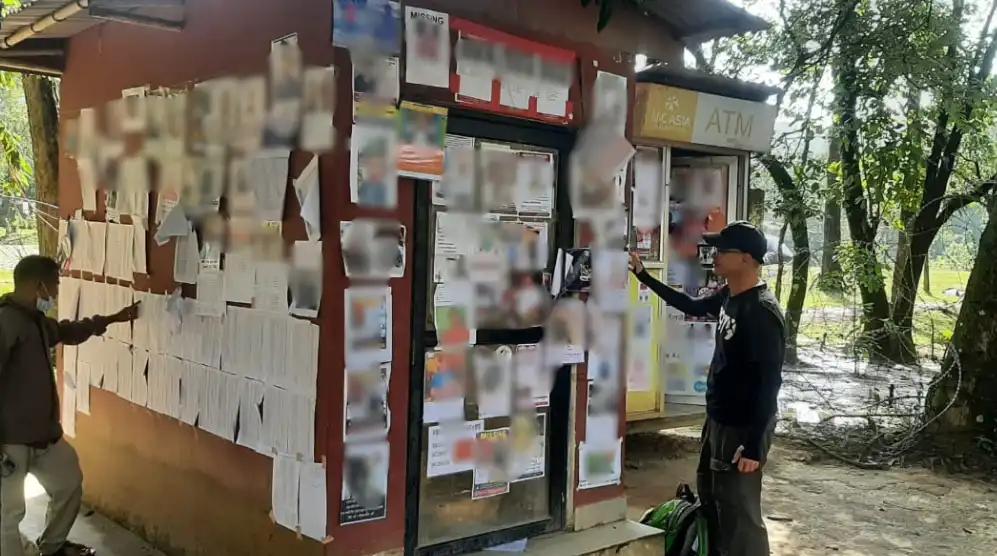
在直升机接运生还者与物资的军方场地,Eddy观察到现场张贴了大量寻人启事,反映许多家庭仍在协寻失联亲人。这也显示,除了物资援助,家庭协寻、资讯比对、家属心理支持等,可能是接下来需要关注的新方向。
四、9月10日:燃气罐与民生物资发放
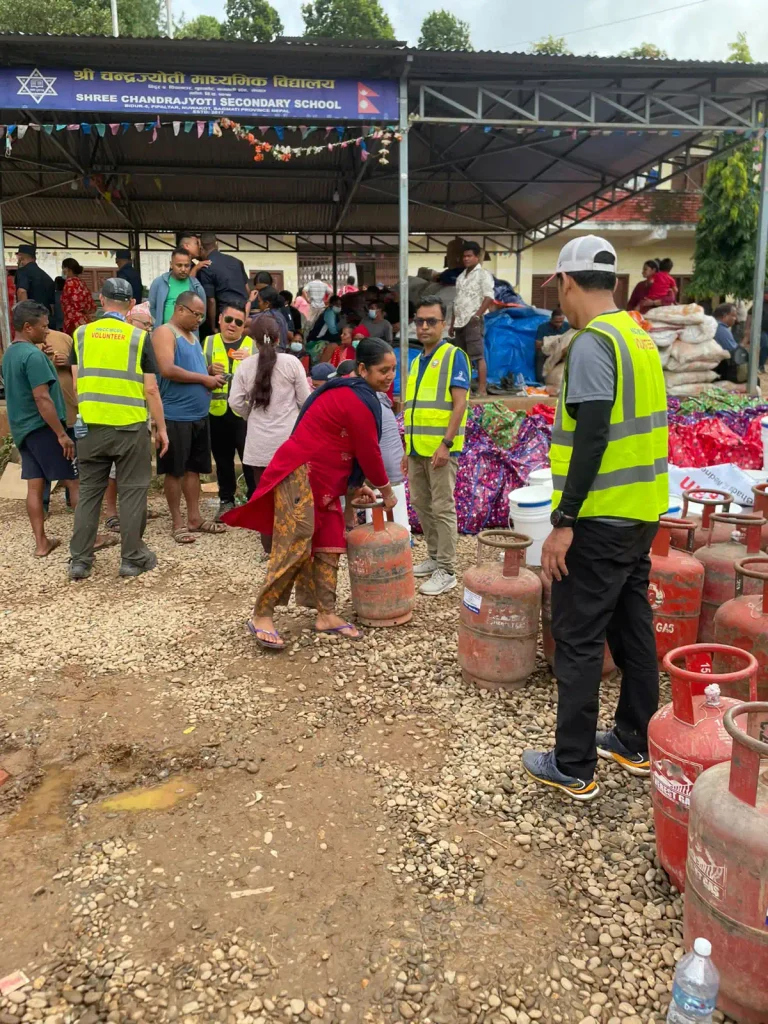
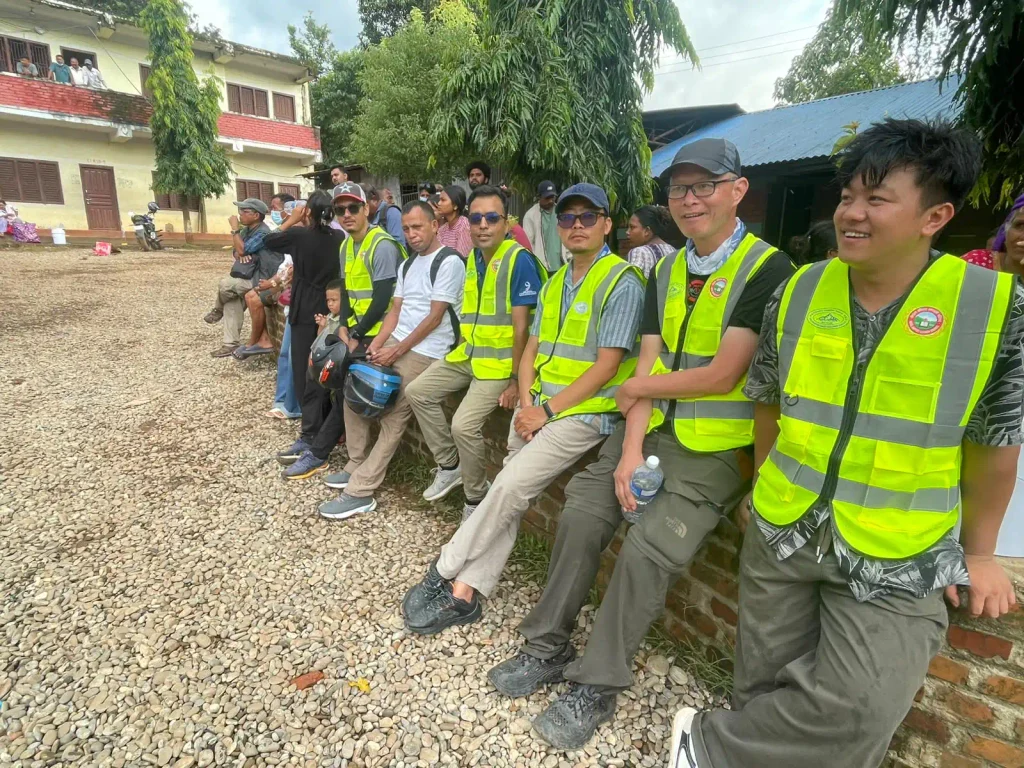
9月10日,团队在Devighat安置中心展开物资发放。第一轮由Samaritan Pulse发放268套净水器与厨房用品;随后MCDS发放了目前尼泊尔最急需的物资——烹饪用燃气罐。由于印度近期限制燃气供应,尼泊尔当地正面临新一波燃气短缺危机,燃气罐一时之间成为最抢手的民生物资。
-1024x472.webp)
政府先前提供流离失所家庭NPR10,000(约RM267)的租屋补贴,对许多失去一切的家庭而言其实相当有限;相比之下,一罐燃气市价约NPR5,000(约RM134),这次发放能实质减轻不少家庭的负担。现场一位居民甚至用马来语和Eddy交谈,提到自己曾在马来西亚工作二十年,如今却失去了所有财产与生意。近期当地每天下雨,也让救援工作增添不少难度。
五、Eddy现场观察与后续方向
- 仍有不少地方尚未能进入,但随着道路逐步清理,可预期会有更多社区的需求浮现,而当地资源也将持续吃紧
- MCDS正在评估当地需要重建的教会
- MCDS也在协助失去一切的基督徒家庭进行后续安置
六、下一步
- 跟进帐篷营地的布局调整与营地管理安排
- 持续关注UNICEF、UNFPA等单位在营地内的服务对接进度
- 跟进教会重建评估及基督徒家庭安置的后续需要
- 延续燃气罐相关的资源需求,并留意印度供应regulation对当地物价的影响
灾情仍在快速变化,7979将持续整理第一线资讯,让每一份关心都能对应到最新、最真实的现场状况。
七、资料来源
现场记录、照片与对话纪要由7979顾问Eddy Hew于2026年9月8-10日在Bidur、Devighat现场提供;部分公共卫生背景资讯参考WHO Nepal〈Nepal: flash floods and health response〉页面。
备注:灾情及需求评估持续更新,后续内容可能调整。基于个人隐私及罹难者尊严考量,部分敏感现场画面(如寻人启事)已作低清化处理,或未纳入本报告。
Nepal Flood Disaster Response · Phase Progress Report (3)
This report summarises field updates recorded by 7979 consultant Eddy Hew in Bidur and Devighat from 8–10 September, covering the progress of the tent settlement, services for women and children within the camp, as well as the distribution of gas cylinders and essential supplies on 10 September.
1. Tent Settlement: Approved by Local Government, Pilot Implementation Underway
Displaced residents in Devighat had initially been temporarily accommodated at Shree Chandrajyoti Secondary School, but the school was due to reopen soon. With formal approval from the Mayor of Bidur, who was wearing a white polo shirt that day, MCDS and its partners were permitted to set up 25 tents on the school football field as a pilot settlement, providing displaced residents with a place to move out of the school buildings.
The temporary tent settlement is being set up progressively, and MCDS will continue adjusting the camp layout according to actual conditions on the ground. There remains considerable work ahead in terms of camp management. Although it is currently still the dry season, winter is approaching, and arrangements for warm clothing and bedding, as well as the longer-term use of the camp, will need to be planned in advance.
Preparations for the camp were temporarily put on hold due to internal coordination issues. However, the local government re-approved the project that same evening, allowing the establishment of the tent settlement to continue. UNICEF also expressed interest in using part of the site to provide educational services for children. The respective organisations are still coordinating the allocation of space and responsibilities.
2. Services for Women and Children in the Camp
In addition to the educational space provided by UNICEF, Eddy also connected on site with UNFPA (United Nations Population Fund) and its local implementing partner, WOREC.
UNFPA will establish a women’s safe space within the camp to provide psychological counselling, health screenings, including maternal care, as well as a child-friendly space to address the physical and psychosocial needs of women and children in the settlement.
Eddy has previously received UNFPA training in emergency sexual and reproductive health services, enabling him to assist with connecting relevant resources on the ground.
3. Military Transfer Point: Emerging Need for Family Tracing
At the military site used for helicopter transfers of survivors and relief supplies, Eddy observed numerous missing-person notices displayed around the area, reflecting the fact that many families were still searching for missing relatives.
This also indicates that, beyond material assistance, family tracing, information matching and psychosocial support for family members may become important areas requiring attention in the next stage of the response.
4. 10 September: Distribution of Gas Cylinders and Essential Supplies
On 10 September, the team carried out relief distribution at the Devighat evacuation centre.
During the first round of distribution, Samaritan Pulse provided 268 sets of water filters and kitchen supplies. MCDS then distributed one of the most urgently needed items in Nepal at present — cooking gas cylinders.
As India had recently restricted gas supplies, Nepal was facing another gas shortage, making gas cylinders one of the most sought-after essential household items.
The government had previously provided displaced households with a rental subsidy of NPR 10,000, approximately RM267. For many families who had lost everything, this amount was relatively limited. By comparison, one gas cylinder costs approximately NPR 5,000, or around RM134, meaning that this distribution could substantially reduce the financial burden on affected families.
One resident at the distribution site even spoke to Eddy in Malay, sharing that he had previously worked in Malaysia for 20 years but had now lost all his property and business.
Daily rainfall in the area in recent days has also added further difficulty to ongoing relief operations.
5. Eddy’s Field Observations and Follow-up Directions
- Many areas remain inaccessible. However, as roads are gradually cleared, more community needs are expected to emerge, while local resources are likely to remain under increasing pressure.
- MCDS is assessing churches in the area that may require rebuilding.
- MCDS is also assisting Christian families who have lost everything with their subsequent resettlement needs.
6. Next Steps
- Follow up on adjustments to the tent settlement layout and camp management arrangements.
- Continue monitoring the progress of service coordination by UNICEF, UNFPA and other organisations within the camp.
- Follow up on assessments for church rebuilding and the resettlement needs of affected Christian families.
- Continue addressing demand for gas cylinders and monitor the impact of India’s supply regulations on local prices.
The disaster situation continues to change rapidly. 7979 will continue compiling first-hand information so that every expression of concern and support can respond to the latest and most accurate realities on the ground.
7. Sources
Field records, photographs and discussion notes were provided by 7979 consultant Eddy Hew during his field visits to Bidur and Devighat from 8–10 September 2026. Some public health background information was referenced from the WHO Nepal webpage, “Nepal: flash floods and health response”.
Note: The disaster situation and needs assessments are continuously being updated, and subsequent information may therefore be revised. To protect personal privacy and preserve the dignity of victims, certain sensitive field images, such as missing-person notices, have been blurred or excluded from this report.